AI Operations: The Defining Skill of the New Era
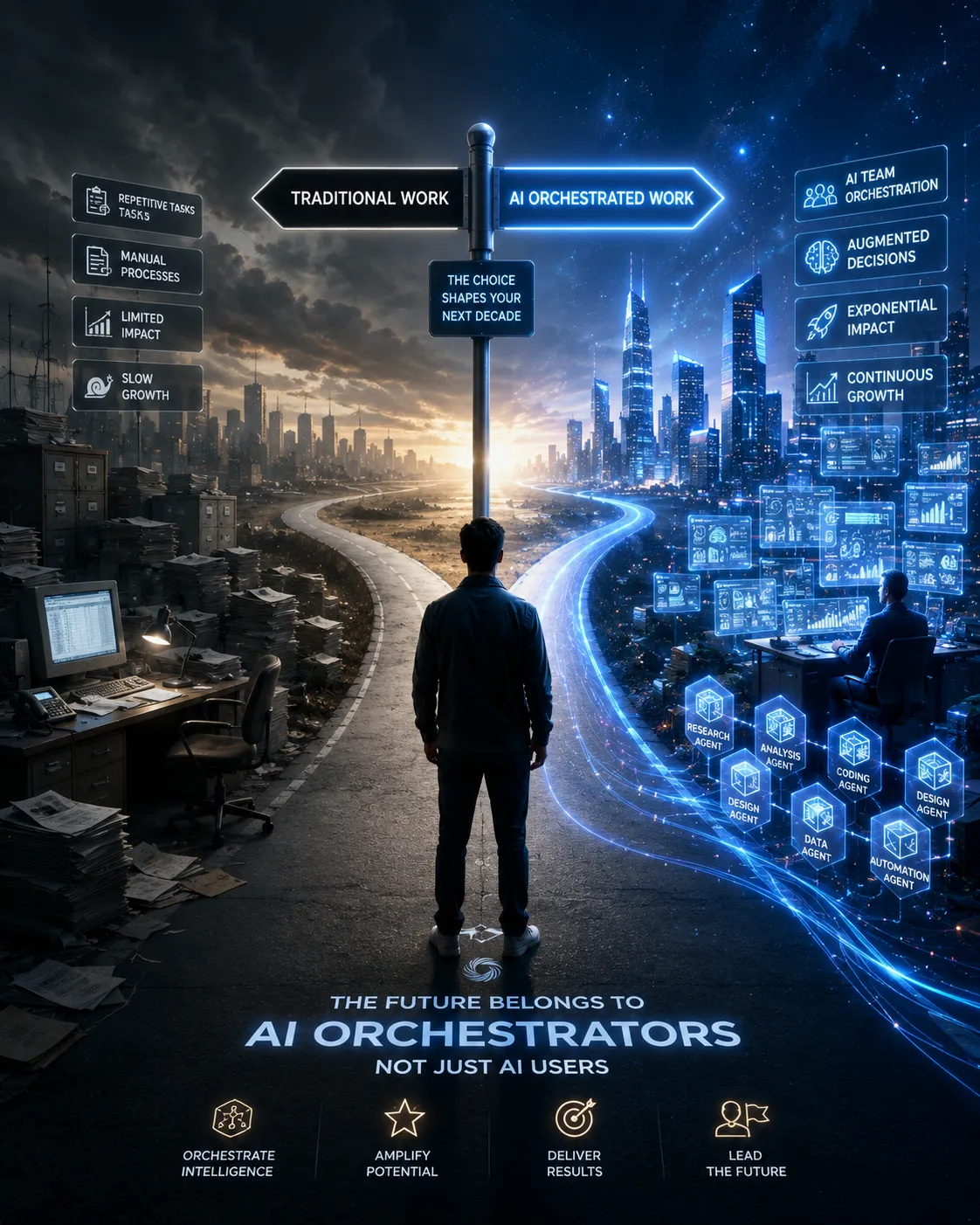
The labor market is separating people who merely use AI from people who can operate AI systems. The distance between those two groups is becoming an economic divide.

Last month, PwC analyzed more than one billion job advertisements across six continents. Its conclusion was not simply that AI will take jobs. The more consequential finding is that the labor market is dividing into two tracks: one is gaining pay, hiring, and productivity; the other is slowly losing ground as repetitive work is absorbed by machine intelligence.
The line between those tracks is no longer just a profession, degree, or number of years worked. It is a much more direct question: can you operate an AI system, or can you only use an AI tool?
1. From doing work to operating systems that do work
PwC's 2026 AI Jobs Barometer reports that jobs requiring AI skills have grown 69% since 2019, almost eight times faster than the wider labor market. The average wage premium for workers with AI skills has reached 62%, with some sectors showing far larger gaps.
The important signal is not the salary figure alone. It is the way AI is separating work. Roles that AI augments are growing: AI handles repetitive production while people focus on judgment, expertise, strategy, and accountability. Roles that AI commoditizes are losing their advantage because their core tasks can be reproduced too easily.
In plain terms, AI is not only dividing the market into people with jobs and people without them. It is dividing it into people who direct systems and people whose work is gradually directed by systems.
2. What AI operations actually means
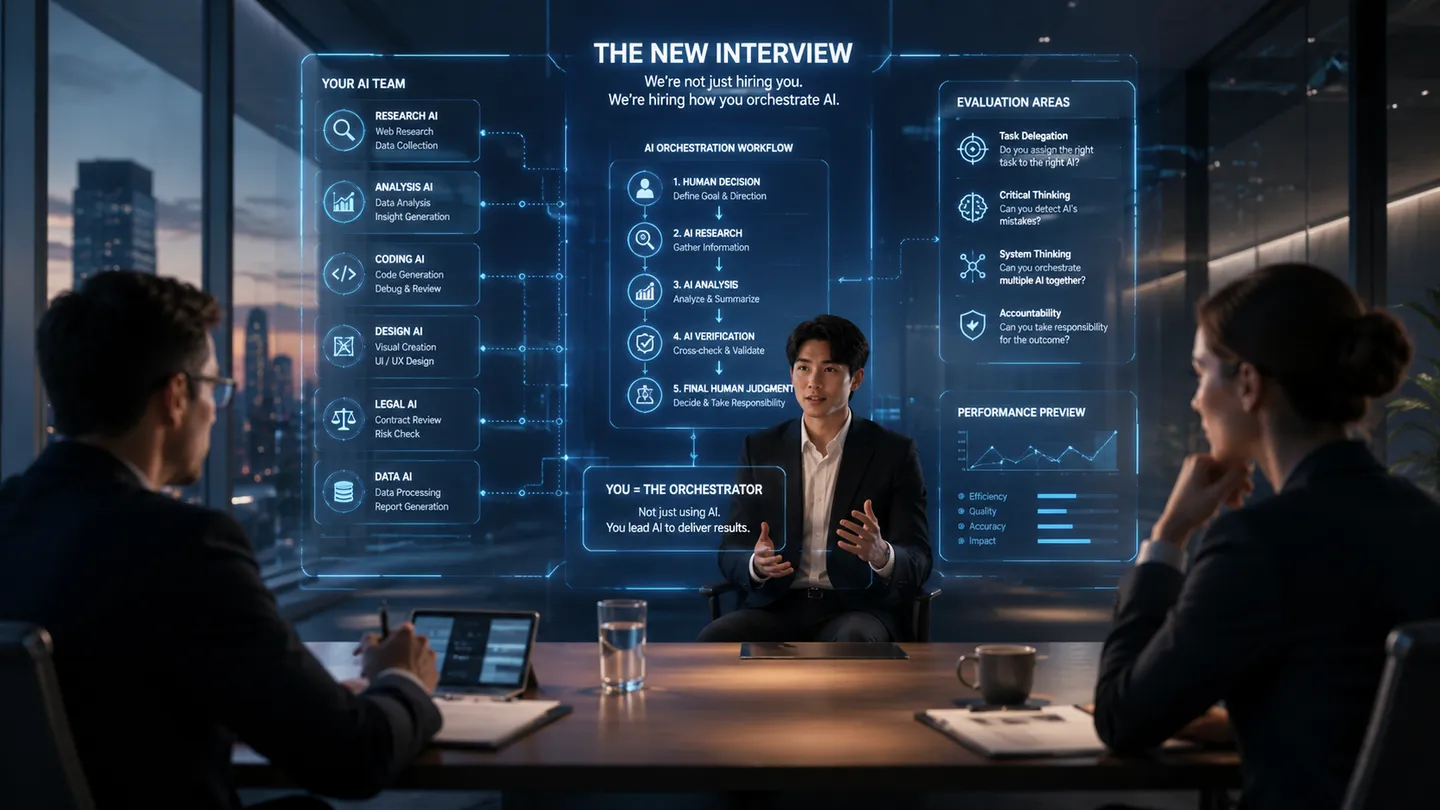
AI operations is not the ability to write a longer prompt. It is the ability to design, coordinate, verify, and take responsibility for a process in which AI participates.
Someone with AI operations capability knows which tasks to delegate to AI, which tasks should never be delegated, and how to split a large objective into pieces that multiple tools or agents can handle safely. They can read outputs critically, recognize when an AI is confidently wrong, and connect research, analysis, writing, coding, and verification into a controlled workflow rather than treating each chatbot as an isolated novelty.
That is the difference between saying, "I use ChatGPT to draft emails," and saying, "I operate a research, analysis, drafting, review, and decision workflow where AI helps, while a human remains accountable for the result."
3. Why knowing how to use ChatGPT is no longer enough
When a skill spreads quickly enough, it stops being an advantage and becomes a baseline. Excel did. The internet did. General-purpose AI tools are reaching the same point.
Recruiting data from 2026 shows AI skills appearing much more often in entry-level job requirements. But if everyone can ask an AI a question, the market will not pay a premium for that action alone. It pays for people who can use AI to produce outcomes that are better, faster, cheaper, and less error-prone.
The real advantage sits one level higher: delegating well, validating outputs, managing risk, protecting data, measuring impact, and turning AI into part of a durable operating system.
4. The interview question has changed
For years, employers have asked, "What can you do?" or "Which tools do you know?" In the AI era, more revealing questions are:
- What have you delegated to AI, and where did it fail?
- How did you discover the error?
- How did you measure the outcome before and after adding AI to the workflow?
- Which tasks do you refuse to delegate, and why?
- If three AI systems give three different conclusions, how do you decide?
These questions test the things a polished prompt cannot conceal: judgment, accountability, and systems thinking.
5. What to practice in the next 90 days
Students: Do not merely list AI tools on a resume. Build a real project: an automated workflow, a small AI-assisted product, or a multi-step report with verification. Be able to explain the decisions you made that the AI could not make. That is evidence of operating capability, not evidence of tool usage.
Knowledge workers: Choose one weekly process such as reporting, data reconciliation, drafting, or customer-feedback triage. Redesign it so AI handles the first pass and you handle verification and decisions. Measure the time before and after. That number can become a real asset in your next performance conversation.
Developers: Shift your professional identity from "person who writes code" toward "person who can stand behind code." AI can generate code quickly, but production still needs architecture, tests, security, observability, rollback, and ownership. People who can operate that full chain will matter more than people who can only generate snippets.
Managers: Change your interview questions now. Do not only ask which tools a candidate knows. Ask which AI workflow they have built, which AI error they have stopped, and how they have remained accountable for an AI-assisted result.
6. The signals are already visible
Across hiring platforms, full-time listings that mention AI have risen sharply. Lightcast data indicates that a substantial share of AI-related roles are outside IT, including marketing, operations, HR, and finance. The World Economic Forum likewise expects a significant portion of workers' core skills to change before 2030.
The common message is simple: AI is no longer a side skill for technologists. It is becoming a general operating capability for knowledge work.
7. The view from Cosmos AI Lab
At Cosmos AI Lab, we do not see AI as a machine that answers questions. We see it as an ecosystem of collaborators, tools, workflows, and forms of intelligence that must be coordinated with human responsibility.
That makes AI operations more than a career skill. It is a new way of thinking: seeing work as a system, assigning the right role to people and machines, designing verification layers, and keeping final judgment where it belongs.
People do not need to become AI engineers to remain valuable. They do need enough understanding to avoid becoming the repetitive part of a system themselves. They need to become capable system orchestrators.
8. Conclusion
A century ago, the key employment question was often, "Are you strong enough?" because value was tied to physical labor. Fifty years ago, it became, "What do you know?" because value moved into knowledge. Now the question is changing again: how much intelligence outside your own mind can you direct responsibly?
In the previous transitions, workers had a generation to adapt. This time, the distance between recognizing the shift early and recognizing it late may be measured in quarters.
The future will not belong to people who merely use AI. It will belong to people who know how to operate it.
References
- PwC — 2026 Global AI Jobs Barometer
- PwC — 2026 AI Jobs Barometer press release
- Euronews — Human skills increasingly in demand as AI reshapes the labour market
- NACE — Demand for AI skills in entry-level jobs nearly triples
- CNBC — Class of 2026 hiring statistics and AI trends
- TripleTen — AI skills in the labor market